
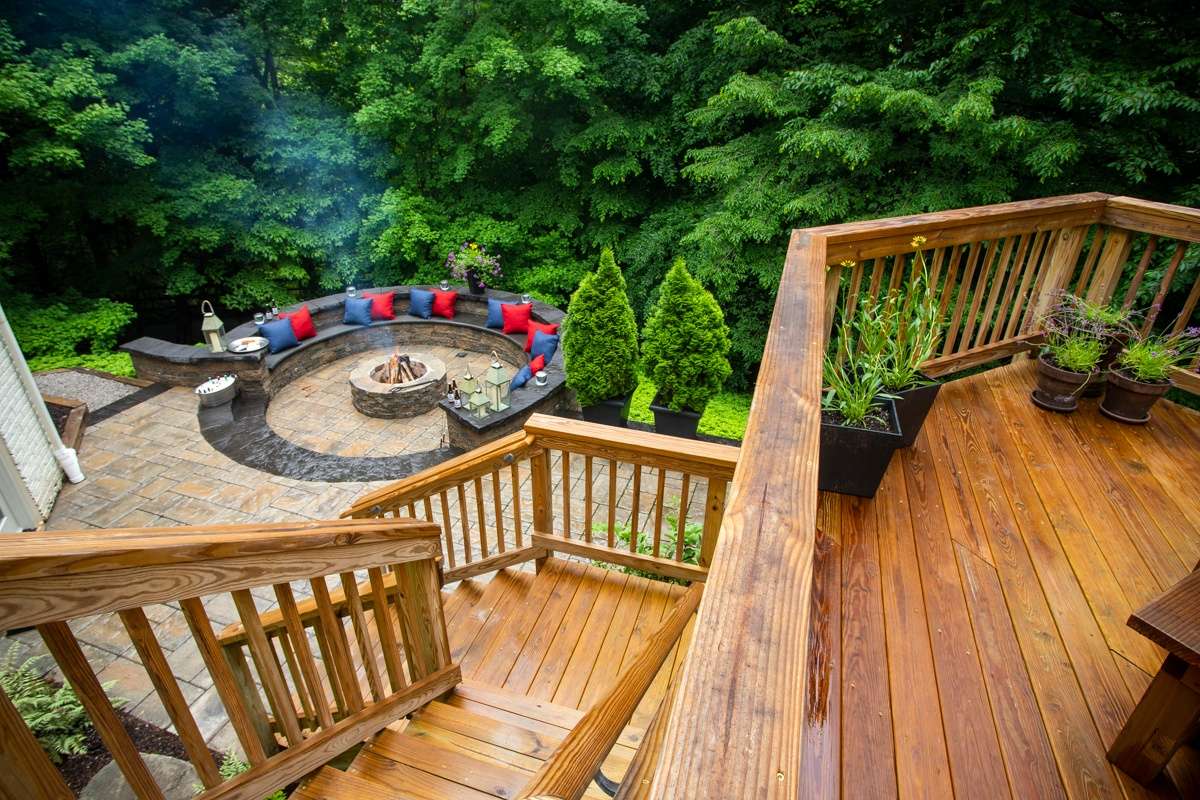

Some decks feel as though the house simply stopped and a platform began. Others seem to settle into the yard so naturally that it is difficult to decide where the architecture ends and the garden takes over.
Loveland is a good place to notice the difference. The city has conserved more than 5,000 acres of open space in and around the community, with landscapes ranging from river corridors and wetlands to upland prairie and foothill terrain. That landscape vocabulary shows up at a smaller scale in residential yards too. Mature cottonwoods, ornamental grasses, stone, native plants and views toward the foothills can give a property plenty of character before a deck is added.
A deck can participate in that setting instead of hovering above it.
Much of the effect comes from the edge.
The Last Board Is Where the Interesting Part Begins
Stand on a typical elevated deck and look toward the yard. Your eye crosses the decking, passes through a railing and then drops several feet before reaching grass or planting. Structurally, that arrangement may make perfect sense. Visually, the change can feel abrupt.
Landscaping can stretch that transition out.
A planting bed beside the deck gives the structure something to meet before the open lawn begins. Taller grasses and shrubs can rise high enough to be seen from a chair. A small ornamental tree farther out may eventually reach the level of the railing, bringing leaves and branches into a part of the view that would otherwise be empty air.
Colorado State University Extension describes landscape design as a process of connecting planted and built areas into outdoor rooms, with line, scale and texture helping determine how those spaces relate. Decks are specifically included among the hardscape elements that need to work with planting rather than being considered separately.
You can feel that relationship most clearly at the places where people move between the two.
A narrow staircase that drops onto a concrete pad creates a very direct transition. Wider steps that arrive near a planting bed feel different. On a lower deck, one broad step extending along part of the edge can make the lawn seem almost continuous with the deck surface. People can sit there during a gathering, set down a garden basket, or step into the yard from several points instead of funneling through one opening.
The right transition depends on grade. Loveland properties range from relatively level lots east of town to sites that begin picking up more terrain toward the foothills. A yard with natural elevation changes can support landings or terraces that let the deck come down gradually.
When stairs have somewhere meaningful to go, the backyard starts to feel less like two separate zones.
Follow the Lines That Are Already There
A property usually has a direction before a deck is drawn.
The back of the house establishes one line. A fence may create another. Mature trees pull attention toward certain parts of the yard, while a garden path quietly tells people where to walk.
The deck can pick up one of those movements.
On a property with a long garden along the side yard, stairs may make sense near that garden instead of centered on the deck. If the yard opens toward a distant foothill view, the deck can leave that direction visually broad. A path leading toward a shed, vegetable garden or gate may be worth preserving rather than forcing circulation around a new structure.
CSU’s landscape-design guidance puts considerable emphasis on line because it influences how the eye and the person move through a property. It sounds like an abstract design principle until you walk through a backyard where the route from the deck to the garden feels effortless. You rarely think about why. You head that way because the landscape has made the direction obvious.
Loveland offers a large-scale version of the same idea. Its recreation trail system connects neighborhoods with parks, natural areas and other destinations around the city, including a 21-mile loop. A residential yard works on a completely different scale, although the appeal of a good connection is similar. The deck becomes one stop within the property rather than the end of it.
Let Plants Get Close
Landscaping around decks sometimes gets pushed several feet away so the structure can stand cleanly on its own. That can leave the deck looking exposed.
Plants near the structure soften its geometry and change what you experience while sitting there. You see foliage instead of the base of a railing. Flowers come up closer to table height. Grasses catch the breeze near the stairs. Depending on the plant, you may notice fragrance or seasonal color from a chair without getting up.
Plant selection needs some restraint around structural elements. Mature size matters, as does access for future deck maintenance. Trees need enough distance for roots and canopy growth, and shrubs should have room to reach their intended form without constantly being cut away from posts.
This is also a good place to think about water use as part of the design. CSU recommends organizing landscapes into hydrozones, grouping plants according to their water requirements and fitting those planted areas into the larger use of the property. A bed beside a deck can have a defined irrigation strategy rather than becoming another patch of thirsty planting added after construction.
Loveland’s larger natural landscape offers plenty of inspiration without requiring a backyard to become a replica of open space. The city’s natural areas include meadows, wetlands, river habitat, prairie and working farmland. Borrowing a few characteristics from the region, such as grasses with movement or plants suited to Colorado conditions, can make a deck feel more rooted in its location.
Materials Can Help the Deck Settle Down
A large deck introduces a lot of one material into a backyard. The effect becomes stronger when railings, stairs and skirting all repeat the same finish.
The surrounding landscape can provide some relief.
Stone used elsewhere on the property can appear near the base of the stairs or along a garden edge. Wood tones can be chosen with the house and existing trees in view. Composite decking may work with a completely different planting palette depending on its color and the architecture behind it.
I like looking at deck samples from farther away. Place them near the house, then walk into the yard. Colors that seem important in your hand become quieter at twenty feet. The relationship with siding, masonry and planting becomes easier to see.
The same is true of railing. From the deck, you mostly see through it. From the garden, the railing becomes one of the most visible parts of the structure. A visually lighter system can allow planting to carry more of the scene, while heavier wood detailing can make sense beside a house with stronger traditional architecture.
There is no reason every component has to disappear. A deck is architecture and can look like architecture. The goal is coherence across the whole backyard.
Give Yourself Something Worth Walking Toward
A connected landscape continues beyond the deck.
Loveland’s larger lots can sometimes accommodate another destination deeper in the yard. It might be a garden bench near mature trees or a fire area that feels better with some distance from the house. The deck becomes the starting point for moving through the property.
Even small yards can create that sense of progression. A curved path through planting can make the trip from the deck to a back gate feel more deliberate. A tree positioned beyond the end of the deck gives your eye something to move toward. A vegetable bed in the far corner creates regular movement across the yard during the growing season.
You begin to experience more of the property instead of spending every outdoor moment within ten feet of the back door.
This fits particularly well with Loveland’s strong connection to trails and natural areas. The city describes its trail network as a system connecting neighborhoods, parks, open lands and downtown. At home, a deck can play a similar organizing role on a smaller and much more personal scale.
The Permit Drawing Is Worth Looking at as a Landscape Drawing Too
Loveland requires a building permit for residential decks. Its current deck guide asks for a plot plan showing the house, lot dimensions, easements and distances from the proposed deck to property lines, along with plan and elevation views of the structure.
Those drawings are obviously used for code review, but they are also a useful chance to look at how much of the property the deck occupies.
Add the large trees to your own copy. Sketch the lawn edge. Draw the route to the gate and where the garden begins. The deck outline suddenly has context.
A structure that looked perfectly proportioned on its own may want to move a little. Stairs might make more sense on the other side. You may decide to give a mature tree more room or preserve a wider planting bed between the deck and fence.
For homeowners planning a deck in Loveland, All Terrain Landscaping can develop the structure along with those surrounding landscape relationships so the finished project feels connected from the beginning.
A deck will always belong to the house structurally. The more interesting question is what happens on its other side. When the stairs, plants and lines of the yard begin right where the decking ends, the whole property starts to feel like one place.
Comments are closed.